
By Julian. I build AI Singer, which competes with Suno, so weigh this accordingly. I also pay the compute bills for AI song generation myself, which is the part most coverage leaves out.
What Suno announced
On August 6, Suno published a post about its downloads policy and Terms of Service. The changes take effect September 3, 2026.
| Plan | Downloads allowed |
|---|---|
| Free | 7 total, ever (personal, non-commercial use only) |
| Pro | 20 per month |
| Premier | 60 per month |
| Premier + Suno Studio | No limit |
Allowances reset on your billing date, and unused ones don't carry over. You'll be able to buy more, though Suno hasn't said what they'll cost.
The caps are retroactive. From Suno's FAQ: "Download limits apply to all music on Suno starting September 3, including songs created before that date." A song you made in 2024 counts against the cap. It stays in your library and you can still share a link to it. Anything already on your hard drive is safe.
That same week, Suno said it would start watermarking and fingerprinting every track it makes.
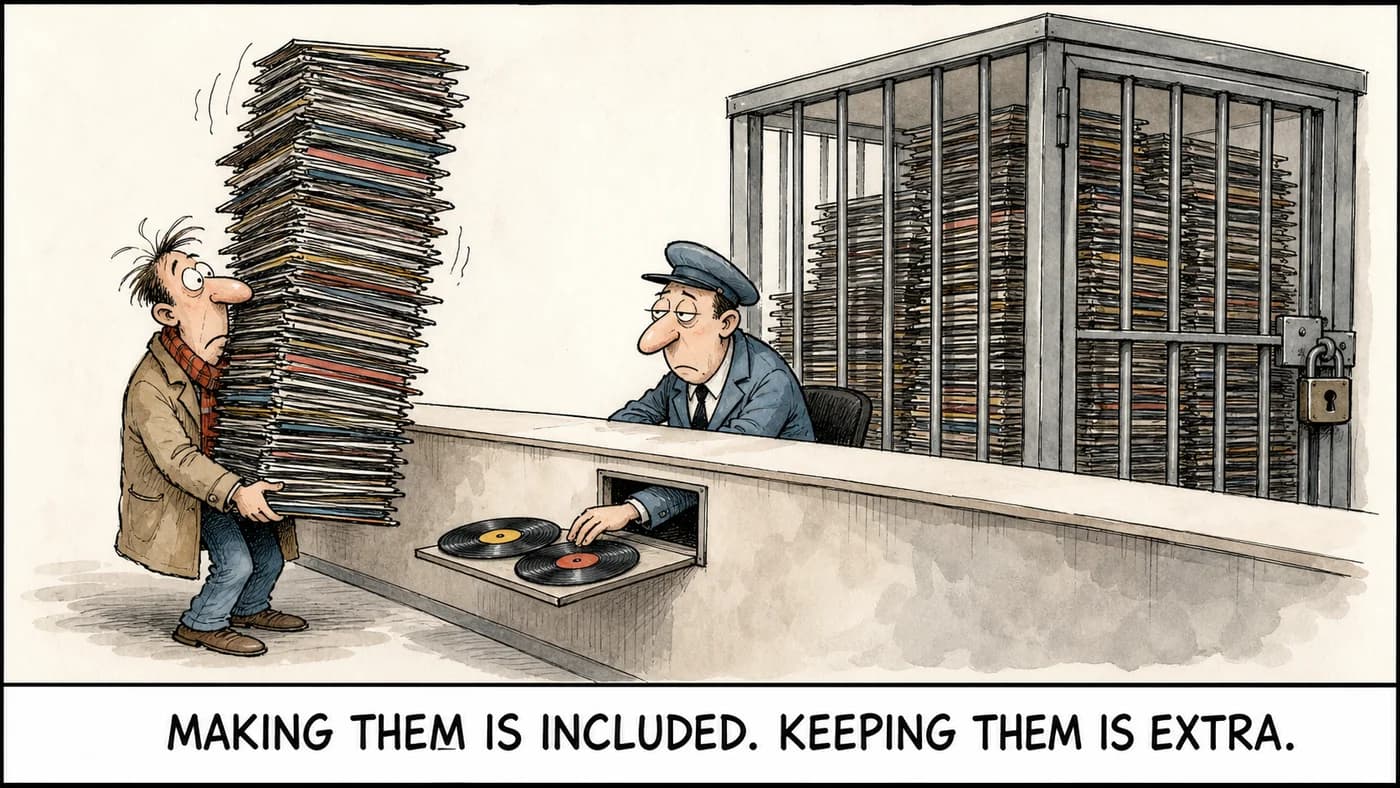
Generate 500, keep 20
| Plan | Songs you can generate monthly | Songs you can download |
|---|---|---|
| Pro ($10/mo, $8 billed yearly) | up to ~500 | 20 |
| Premier ($30/mo, $24 billed yearly) | up to ~2,000 | 60 |
Pro lets you make about 25 songs for every one you can keep. On Premier it's roughly 33.
Your plan now covers the making. Keeping what you made is metered separately.
Why Suno is doing it
Suno raised $400 million at a $5.4 billion valuation in June, two months before announcing these caps.
The immediate reason is legal. Suno is fighting copyright suits from the major labels, and streaming services are drowning in AI tracks uploaded to farm royalties. Suno was the easiest tool for that job, which hurts it in court. Capping downloads goes at the bottleneck for mass uploading while leaving people free to make music. It's a blunt instrument pointed at a real problem, and I'd probably reach for it too.
The caps also create something Suno didn't sell before. Downloads past your allowance will be purchasable, which turns a feature that came bundled with a subscription into a metered product with its own price. A company valued at $5.4 billion has to grow into that valuation eventually, and the revenue has to come from somewhere.
What happened to Udio
Last October, Udio settled with Universal Music and turned downloads off altogether. People who had been paying for months could no longer take their own songs off the site. After the backlash, Udio opened a 48-hour window so they could rescue their libraries. Users had two days' notice to save everything they had ever made.
Ten months later, Suno is capping downloads on songs people have already made.
Both companies were negotiating with record labels when they made these decisions, and neither was short of cash at the time. Once you have raised hundreds of millions and you are sitting across from a label's lawyers, your users' download rights become one of the things you can put on the table.
Why the free years end
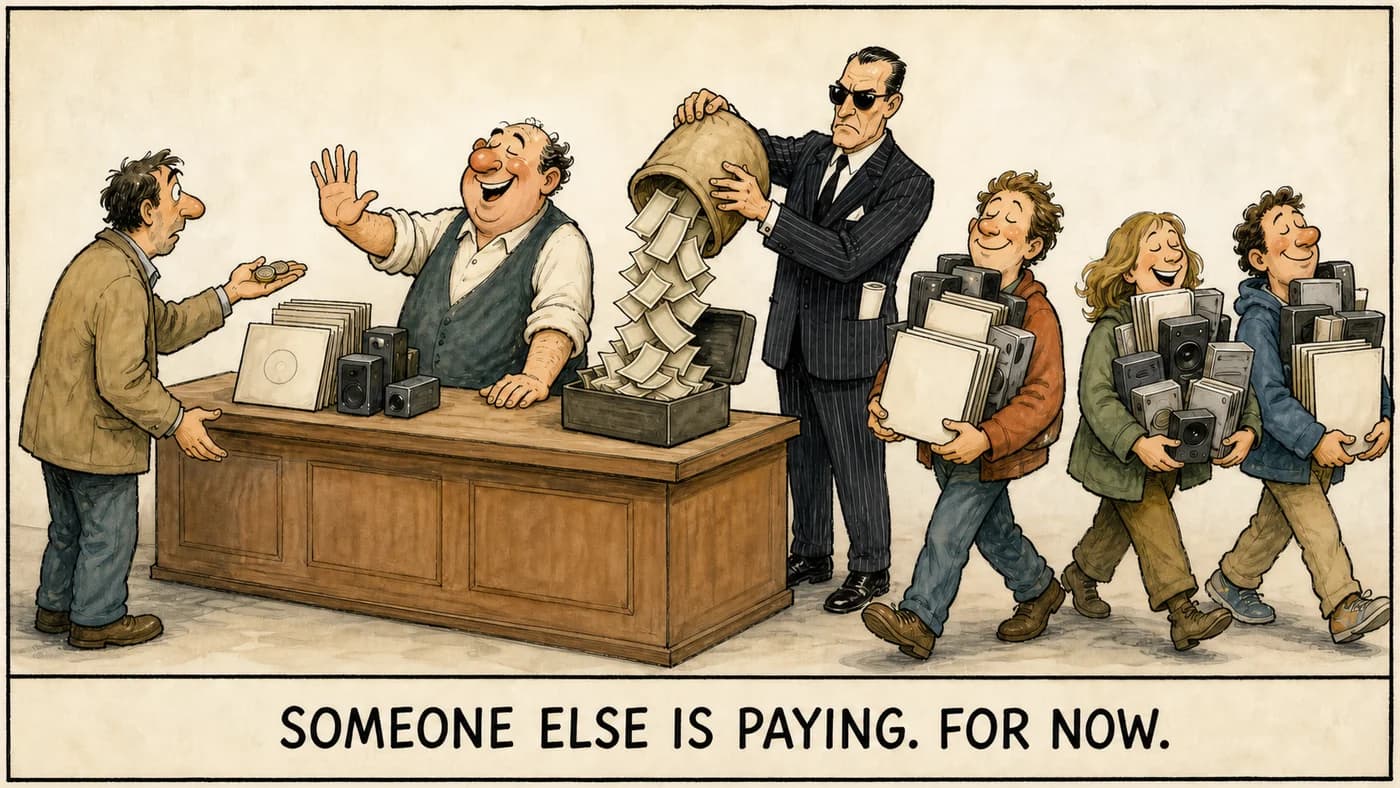
Venture money buys users. It pays for the generous free tier, the uncapped downloads, and the price that looks impossible to sustain, because someone else is covering the difference and expects repayment with interest.
That repayment reaches you eventually. Prices go up, free tiers shrink, features move into higher plans, and terms get rewritten. Once growth slows, the revenue has to come from the people already using the product.
This happens without anyone behaving badly. A business that raises $775 million has promised returns that a merely healthy company cannot produce. Investors need an exit, either a sale or a listing, and both hand the product to new owners with plans of their own. The people who use the thing every day get a say roughly equal to their share of the cap table.
What a song costs me, and what I charge
Every song passes through several paid services before you hear it. One moderates the request and writes the lyrics, another composes and records the track, another draws the cover art. If you asked for your own voice, a rented GPU takes the finished song apart, replaces the singer with you, and puts it back together. I pay for all of it whether or not you like the result, download it, or ever subscribe.
So here is my pricing, plainly. The yearly plan is set so that if you use every song it includes, I earn nothing. That is the floor, and going under it would mean not doing this for a living. My money comes from the shorter plans, from top-ups, and from people who don't use everything they paid for.
I would like to give away more. Nobody is subsidising this, though. There is no round behind me, no investor covering the gap, and no plan to raise one.
What I can promise
Every song your plan lets you make, you can download. No separate download allowance, no counter, no charge per file. Lose a file and you can download it again. Your plan limits how many songs you make, and that's the only limit there is.
I also can't have a Udio moment, for a fairly boring structural reason. Nobody will offer me $400 million to take your downloads away, because nobody is offering me $400 million. There is no bigger deal your files could be traded for.
I won't promise forever, since anyone promising forever is guessing. You can at least check who has the power to change it, and here that's me.
Where Suno beats me
Suno's free tier beats mine. You get seven lifetime downloads there against zero here, because downloading from my app requires a subscription.
Suno is cheaper if you generate a great deal and keep very little. Ten dollars a month covers roughly 500 generations, well under a penny each. Compute for this kind of work is expensive for everyone who buys it, and a price like that doesn't come from efficiency alone. A $5.4 billion valuation is what makes it possible, and the difference stays someone else's problem for now.
The sums change once you count the songs you get to keep. My weekly plan is $5.99 for 50 credits, and a song costs one credit, or two when it's sung in your own cloned voice. Every one of them can be downloaded. Suno Pro billed annually comes to $96 a year and allows 240 downloads across those twelve months, which is about 40 cents for each song you end up owning. The yearly plan here is $59.99 and brings my side down considerably further.
Which of us is cheaper depends on how many of your songs you want to own.
Suno is also a different product. Type a prompt and get a finished track in any style, in under a minute. AI Singer records ten seconds of your voice and makes a song sung in your voice, for birthdays, weddings, and memorials. If you need background music at scale, Suno is built for that.
And if you want a way around watermarking so you can bulk-upload tracks to Spotify, I don't want that traffic.
What to do before September 3
Download anything on Suno you care about while the current rules still apply. It costs nothing. Suno has given several weeks of notice, which is more than Udio managed, and the date still arrives.
Check your rights too. On paid plans, downloads stay yours for commercial or personal use. The free tier's seven are personal use only. If you've been using free-tier tracks in monetised videos, read the new terms before assuming your old ones carry over.
Common questions
How many downloads do you get on Suno's free plan?
Seven in total for the life of the account, not seven per month, and personal use only.
How many downloads does Suno Pro include?
20 per month, reset on your billing date. Unused ones don't carry over.
How many downloads does Suno Premier include?
60 per month. Premier subscribers using Suno Studio have no download limit.
Do Suno's download limits apply to old songs?
Yes. From September 3 the caps cover everything in your library, including songs made before that date. Files you already downloaded are unaffected.
Can I buy more Suno downloads?
Suno has said extra downloads will be purchasable, but hasn't announced pricing.
Will my existing Suno songs be deleted?
No. Songs stay in your library, playable and shareable by link on every plan. Only downloading is capped.
Why is Suno limiting downloads?
To make mass uploading of AI tracks to streaming services harder, alongside watermarking and fingerprinting. Suno is defending copyright suits from the major labels, and the flood of AI uploads sits at the centre of those disputes.
What happened with Udio?
After settling with Universal Music in October 2025, Udio switched downloads off entirely, then gave users a 48-hour window to save their libraries.
What's a good alternative if I want to keep my songs as files?
It depends what you're making. Soundraw and Mubert sell download-inclusive plans for instrumental and background music. Udio and Sonauto are closest to Suno in kind, though Udio has removed downloads before. If the song is personal and you want it sung in your own voice, that's what AI Singer does, and subscribers download every song they make with no cap.
Written by Julian, founder of AI Singer at CurlyCorn LLC. Suno's prices, caps and terms are as announced in August 2026 for the September 3 change; check Suno's own pages if you're reading this later. My full AI Singer vs Suno comparison goes deeper on the product differences.
Ready to Try AI Singer?
Record 10 seconds of your voice. Get an original song in under 5 minutes.


Related Articles
AI Singer vs Suno: Which AI Music Generator Should You Use?
Compare AI Singer and Suno side by side. One clones your voice in 10 seconds, the other generates AI music. See which fits your needs in 2026.
Udio vs AI Singer: Music Quality vs Singing in Your Own Voice
Udio generates high-quality AI music. AI Singer clones your voice in 10 seconds. Compare features, pricing, and find which tool fits your needs.
Best AI Song Generators in 2026: A Roundup
We compared the top AI song generators of 2026 — Suno, Udio, Kits.ai, and AI Singer. See who wins for speed, quality, voice cloning, and value.